
One summer, my husband I bought a Kayak. I’d done a lot of research and found an inflatable one with excellent reviews that fit our budget and space constraints. We had both canoed before, and Jack had once owned a sailboat. A kayak is a little different, and an inflatable differs from a hard body. It’s a long hike back if it gets punctured. We spent much of the summer discovering coves in a reservoir and venturing into places we couldn’t reach on foot.
The northern portion of the reservoir we could not launch from. All the launch ramps had been closed and locked. No access for the entire summer. it was now a snowy egret breeding area. We looked for lesser known ramps at the north end, but their narrow footpaths were far too steep. The next nearest launch was a few miles away, in the midsection, a pretty long haul. After a few days deliberation, we developed a travel plan. By making a day of it, we got up early and took a hefty lunch. We’d paddle farther than we ever had before.
My husband was always up for an adventure. However, due to age, COPD and his general health, strength flagged quickly, leaving the bulk of paddling up to me. I didn’t mind paddling for two. Endurance comes down to planning, mindset and rhythm. I was excited for these adventures. Jack chipped in as he was able, which I kept in mind as we planned our excursion. I trusted that we’d built up enough arm strength over the summer to reach the northernmost edge and also return.
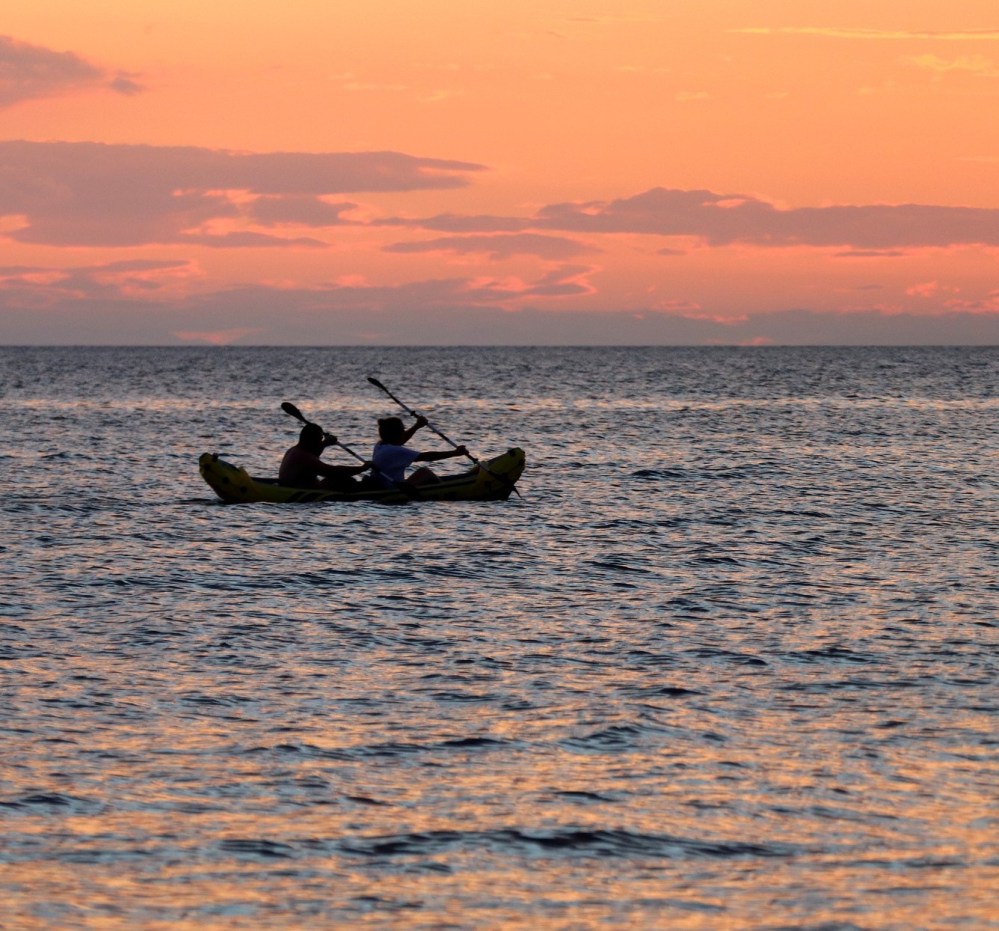
The pass one way would be equal to one of our usual round trips. I informed two people of our plan, when we estimated our return just in case. And then, we launched.
Halfway to the norther pier, it became evident we were traveling in much deeper water with unfamiliar currents. We were alone on the water. Neither of us had a phone if our arms totally gave out. We rowed and paddled and paddled some more.
Jack chatted and remarked on the scenery. His arms had already given out and my arms were burning. I so much wanted to see the northern coves. I made a game of landmarks. I’d focused on the bridge, once there, the island just beyond and finally the pier. I was ready for a rest and a nap to recover.
We arrived at our destination—Yay us!—but now on my mind was the return trip. We skimmed through mud-colored waters past a bridge ruin of a long over grown road. In a thin tributary, we slid the nose of the kayak up onto a gravel beach. We ate our lunch enjoying a gorgeous day, and clouds offering brief respite from the baking heat of a bright August sun. I was glad we’d made the trip.
My arms were shaking tired from paddling but I refused to fail. The boat ramps were all locked and we couldn’t get out for the same reasons we couldn’t get in to begin with. I could have slipped into negative self-talk, but I knew better. Even when my husband continued to voice his doubts and concerns, I blew them off. In fact, I came back at him.
“We’ve been doing this all summer. Our arms are the strongest they’ve ever been!” Did I mention we had no phones?
“Are you sure we can make it back?” my husband asked. I could only surmise that his arms were on fire and he didn’t have any more strength. I knew my arms would begin burning again pretty soon. What would we do if all my strength gave out too? I hoped with all my heart that every bite of my lunch would be enough fuel to keep me going. But mostly, I needed to hang onto a positive attitude.
“Of course I’m sure!” I hoped I sounded convincing as we paddled back to the main reservoir. I focused on a smooth consistent pattern, making a mantra to match the rhythm. I can do this, I can do this, I can do this… When you’re out on the water, if you look at the water around you, it’s hard to tell if you’re moving fast or slow. It seems like you’re not really getting anywhere. Thinking that you aren’t making progress is psychologically draining and demotivating. Like many undertakings, this must be broken down into manageable chunks. This trip—as overwhelming as it seemed in the moment—was no different.

This is the point where it’s so easy to quit. When those moments come, there is another choice: Power through. What does that look like? From a kayak, it was finding a point on land, and paddling toward it. Once I got close to that landmark, I found another one to focus on. Passing each landmark counted as a small victory. When the burn set in, I went into an almost hypnotic state, rhythmic paddling. My husband contributed when I felt my worst, which did speed us along. I could tell he was spent.
Powering through means letting go of timetables. Yes, the trip was long and yes, my arms ached, but I promised myself I would rest when it was over. The less I paddle, the longer it takes. The more I do now the sooner we get home…
Fortunately, the reservoir didn’t have a lot of twists and turns. I was pretty certain of our way back, even when my husband wasn’t. I remembered landmarks as they came into view and when I knew we were close to our launch point, I got a second wind. And before we knew it, we were back at our launch cove–with bragging rights.
So what does this mean for you?
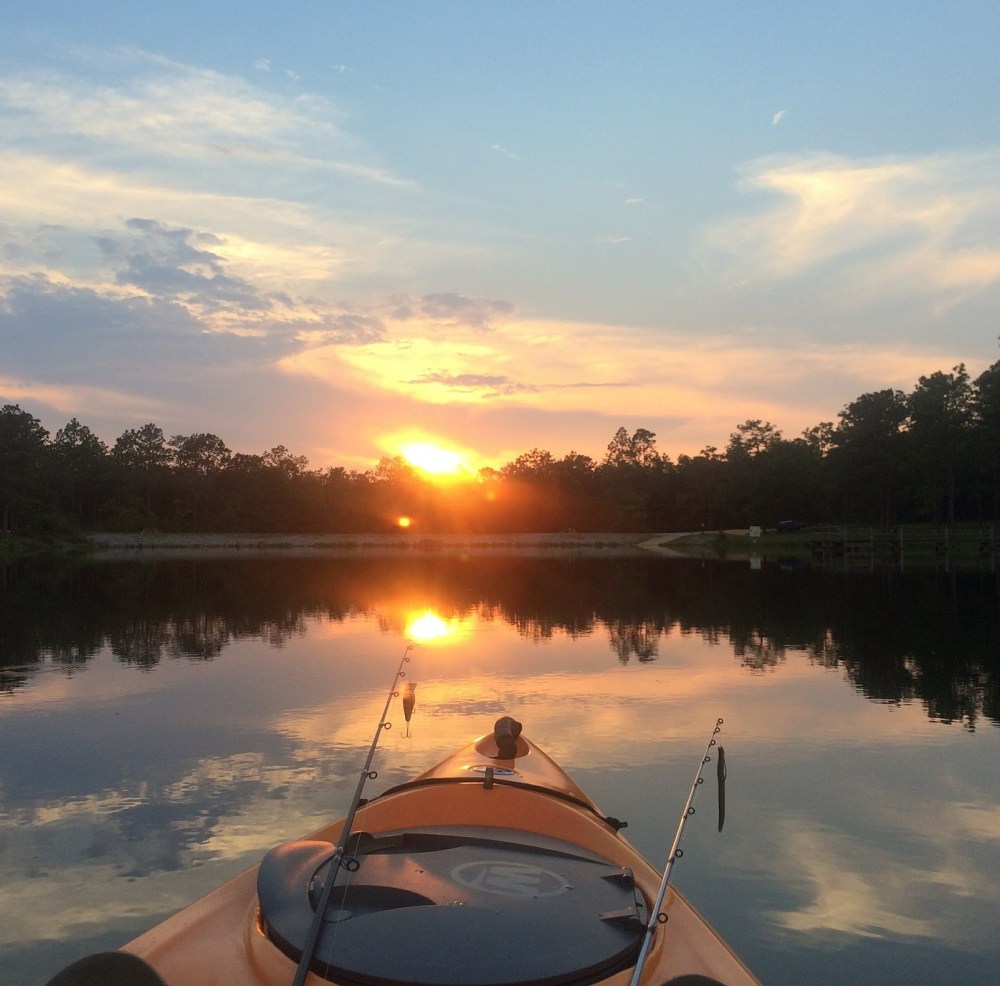
Everything we endeavor to do is not going to be easy, or happen like we think it should. I’ve found that if I just keep moving forward, no matter how incrementally, I get where I need to go. Keeping a positive attitude is wind in the sails. My husband may have been concerned but he never once said we wouldn’t make it.
I learned a lot about myself on that trip. It really took all the strength I had to get back to our launch. While I was thrilled about our success–that was very empowering!–we never kayaked again. Two years later, the north point boat launch finally reopened. By then we had already proven that we had what it takes.
What is the most grueling thing you’ve ever had to power through? Share it in the comment box below, I’d love to hear from you.

 Juli Ocean