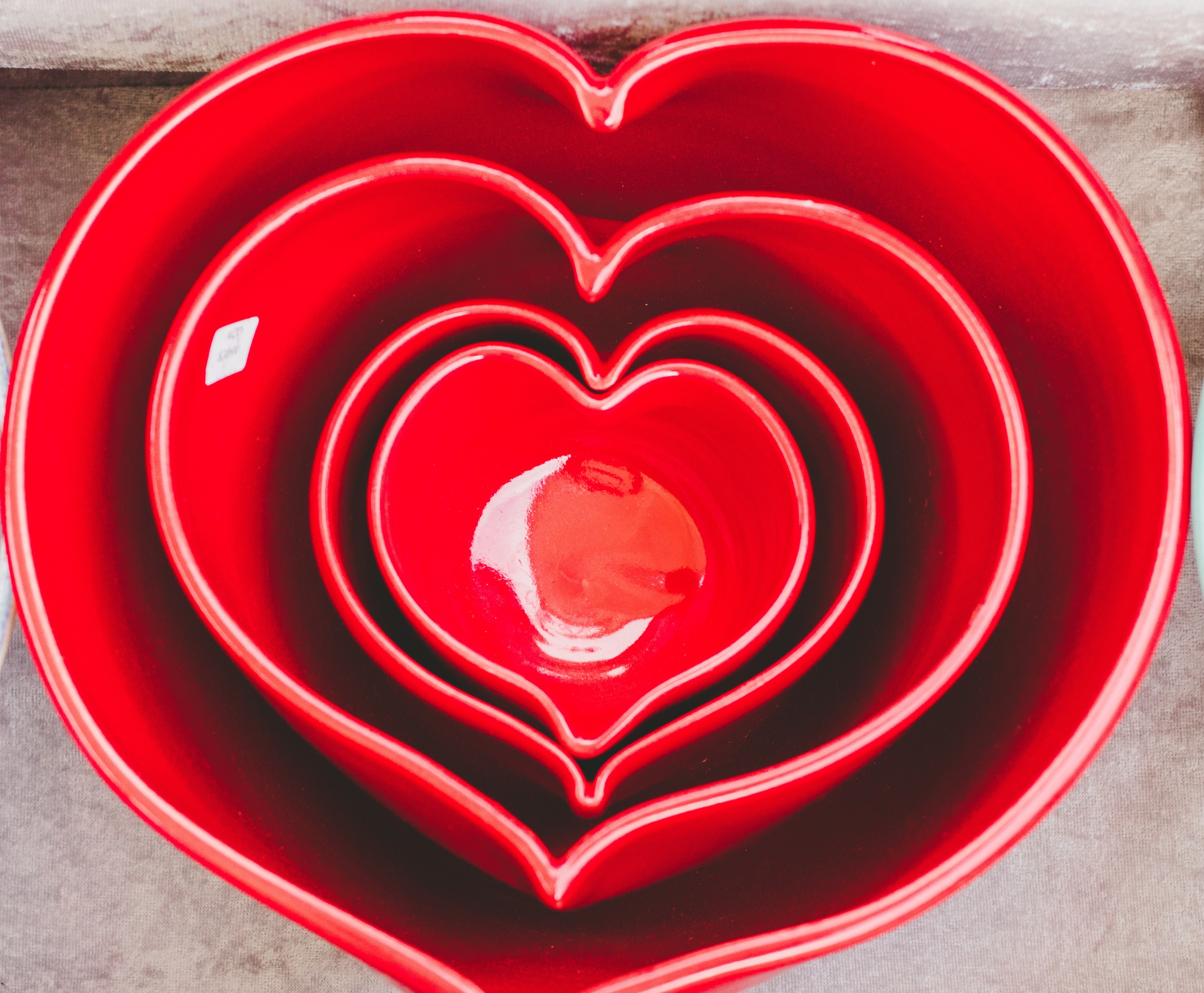
Have you ever had something that was a big part of your life? You could be in it every day for so many months or even years. And then something changes. One day you realize it’s in the past, buried under a bunch of time. You might not think about it for so long that you almost forgot that it’s part of your history. It can seem like it another life belonging to someone else.
I had that experience this week. I met with a new friend for dinner. She wasn’t aware (as some of you already may know) that I’d had a long and varied career as a professional artist. The short arc was beginning with humorous illustration and ending with creating my own clay, glazes and tile make custom mosaics.
My dinner companion asked what I had learned as a potter. My favorite is the parallel between the potter and the vessel, God, and man. Everyone starts out as a lump of clay. Some are brown, some porcelain, some are red, some speckled. Each kind of clay has its own characteristics. They differ in how much heat they can take, their plasticity, their strength. All made of the “same” material.
Depending on what the finished vessel is destined to be, some lumps are bigger than others. A bowl, a pitcher and a casserole dish require different amounts of clay. Each has a different function and different stresses.
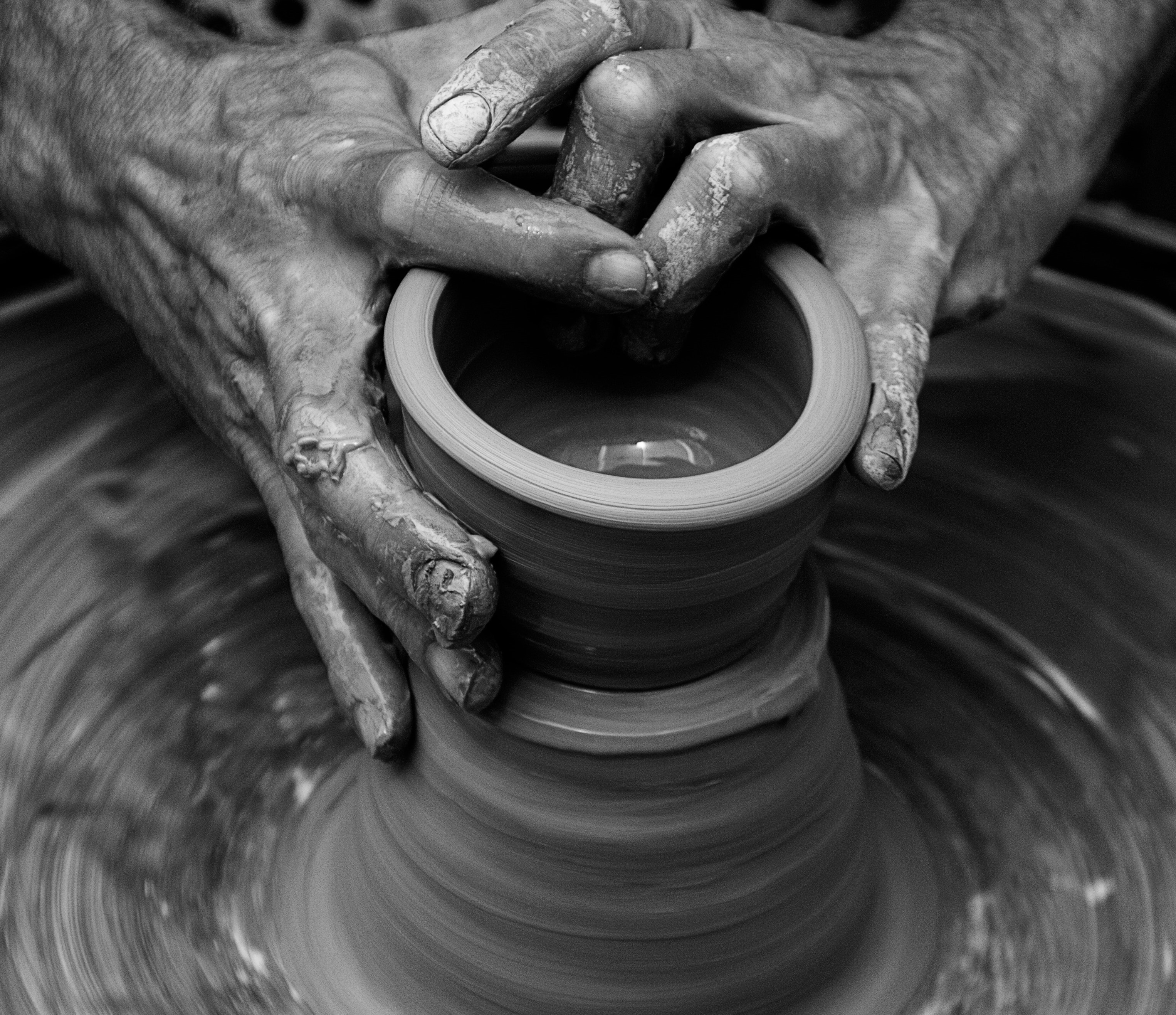
Centering the clay lump requires the potter using both hands with uniform pressure. It reminds me that the father is close to us, that we are never alone.
Too much pressure on one side throws it off-center. This is the foundation. If it isn’t centered, everything about the pot will be off. If it doesn’t start out right, the vessel will be thick on one side, thin on the other and start to get wobbly. If it dries and goes into the kiln like that, the vessel will crack where it’s thin and the thicker side can’t expand fast enough. Or it may explode because the heat will be unevenly distributed.
The best thing for the potter to do is to cut the vessel from the wheel, re-knead it and start over. It isn’t that he can’t use the clay, he can. He has to reform the lump, and re-center the clay and start again. I love knowing that the potter cannot make a vessel without leaving his mark on it.
The next step is the drying off period and trimming stage. A bowl needs to have excess clay trimmed off the bottom to give it a solid foot ring. Usually, it’s turned upside down and anchored so it doesn’t fly off the wheel while being trimmed with a wire tool.

Too much pressure in anchoring and the rim of the vessel will cause it to warp or crack. The potter must know how much to trim so the bottom isn’t too thin, which will cause cracking in the firing.
During the firing, a piece goes into the kiln and will be heated slowly while temperatures go higher and higher. All the unnecessary fillers and impurities are burned out of the clay, which causes it to compress and harden so that it can be used. Without this critical step, the pot will continue to remain mud, or be too porous and extremely fragile and unusable as anything but decoration.
Every vessel is created with a purpose and to that end, the potter creates each one knowing its characteristics and its limits. Some are decorative, some are for common daily use, some are for noble purposes. The ones that are more ornate take a little more time and a little more care.
These illustrations showed me how Yehovah moves in seasons and cycles. I could rest assured that He was in control and that He would see me through every step of the process. Pottery helped me see how I can be different and still fit into the family of God. Just as plates, bowls, casserole dishes, mugs, and pitchers serve together in daily meals, we can’t do each other’s job, all are needed and have a purpose.

What does this mean for you?
You may not know if you’re on the wheel being formed or being kneaded in preparation for being formed. You might find yourself being trimmed, or you may be in the kiln—the refining and purifying fire the removes all the unnecessary filler—to be hardened for use.
Wherever you find yourself, don’t lose heart. Everyone goes through each step of the process which is designed to help us become the best version of ourselves. Even if you find yourself in a place where it feels like the heat’s been turned up—trust that you are in the final phases of your development and will be ready to move forward in a new and stronger way.
Thanks for coming by! Can you relate to the story? What stage are you in right now? If you have an opinion, I’d love to hear it. Drop your comment in the box below. I look forward to the next time!

 Juli Ocean
I really needed this right now. Always reminding myself I’ll get the new job in God’s time. This reinforces that. Thanks. 💟
LikeLiked by 2 people
I know it isn’t easy waiting on God, but it’s worth it. I’d rather be in His timing any day. He knows exactly what we need and when we need it and can see the whole situation from beginning to end. I trust that by faith.
LikeLiked by 1 person
Hope you don’t mind my reblogging with a few words about what I think of you. NOT flowery at all, just a few words hope is OK.
LikeLiked by 1 person
Reblogged this on From The Darkness Into The Light and commented:
An artist an author, a ghostwriter and much more. She is the Lady that encourages me in writing my book, without her I think it would be a lot more difficult. She is the perfect cheerleader and loves the Lord.
LikeLike
Jeremiah 18
LikeLiked by 1 person
This is one of my favorite chapters. I felt like there was so much that I learned in that process and it really felt profound at the time. Really helped me get through a tough time. Thanks for your notes, Patrizia, you sweet lady. Always good to hear from you.
LikeLiked by 1 person
By the way I made a bottle in school with all kind of colors that my parent kept.
LikeLiked by 1 person
Very interesting both the fact that you are also an Artist in a different way and the analogy to the Creator potter.
LikeLiked by 1 person